
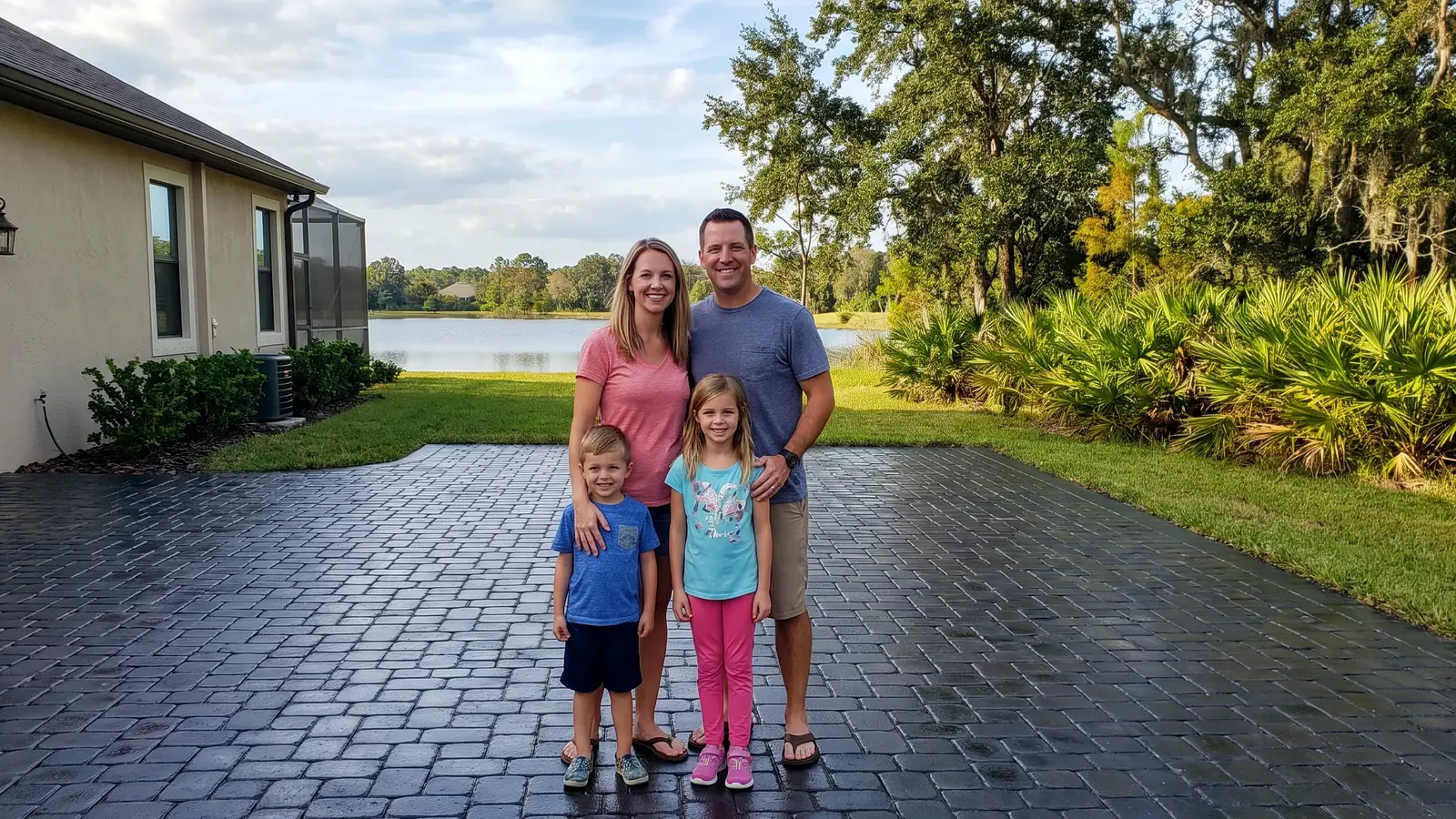
Longer-lasting color and easier upkeep
Paver Sealing in FishHawk, FL
Request a free paver sealing estimate for your FishHawk home, or call (656) 269-5576 today.
- Brings out deeper paver color
- Fresh joint sand helps lock pavers in place
- Gives weeds less room to grow
- Makes the surface easier to keep clean
- Free estimate, no obligation
Request a Free Estimate
Free, no obligation.
Who can seal my pavers in FishHawk, and how soon will I hear back?
A local contractor can seal your pavers in FishHawk, FL, and you will hear back within 1 business day, usually much sooner. The estimate is free, with no obligation. To get started, call (656) 269-5576.
Sealing deepens paver color and holds more sand in the joints. Unilock says a sealed surface is easier to sweep and wash, and that tighter joints leave seeds fewer places to settle. Your driveway stays cleaner between washes. Unilock adds that sealing guards against sun fading, which matters most on open driveways. Ask the contractor which product and finish will go on, and keep the answer in writing. When you ask for a free estimate, mention how each area is used.
Paver Sealing FishHawk Is Proud to Serve Tampa Bay
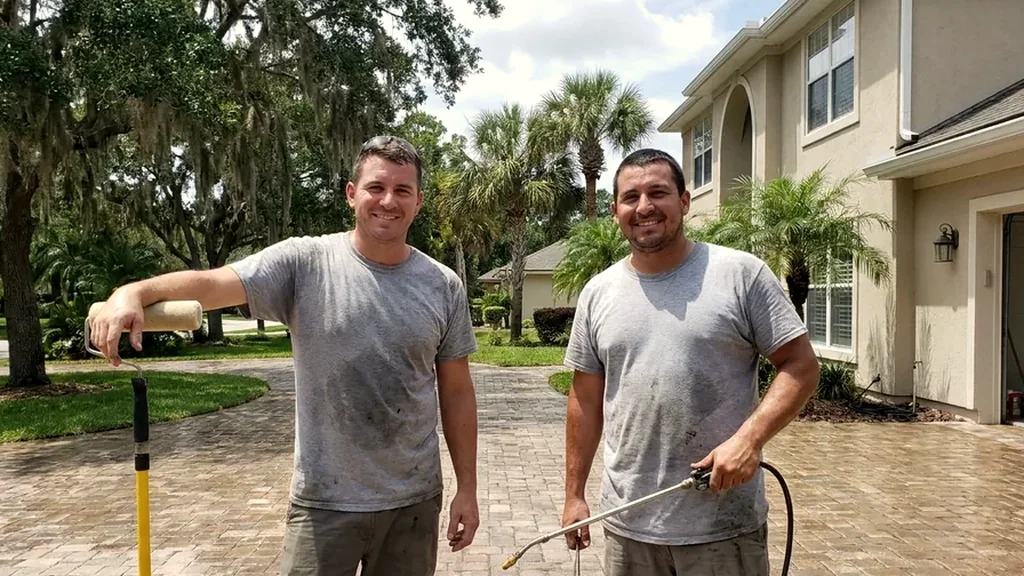
What does a paver sealing job include?
A sealing job has four parts: a look at the surface, a wash, fresh joint sand and the sealer. The wash comes before the coat, because sealer locks in whatever is left on the surface. For the steps as they apply to your pavers, call (656) 269-5576.
Surface check
The contractor looks for dips, loose pavers, stains and old sealer, and notes where water stands after rain.
Wash
A stiff broom, a hose or a low pressure wash lifts dirt, and a dedicated paver cleaner goes on oil and grease.
Joint sand
New sand is swept into the joints once the surface is dry. That keeps pavers locked together and leaves weeds less room.
Sealer
The coat goes on a dry surface by sprayer, roller or both, at the coverage the maker lists for that product.
How do I know my pavers need sealing?
Pavers need sealing when the color looks chalky, joint sand keeps washing out or water soaks in instead of beading. Western Interlock, a paver company, says spots where water no longer beads are the ones to reseal. Low joint sand also lets weeds root and pavers start to move. To get yours looked at, call (656) 269-5576.
Which paver sealer works for a Florida home?
There are two main types, and installers have their favorites. Water-based sealer has a low odor and cleans up with water, and Unilock says it can also firm up the joint sand. Solvent-based sealer tends to be a little more durable, but Unilock says it must go on perfectly dry pavers and joints. Ask which one the contractor plans to use. To talk it over, call (656) 269-5576.
Coverage and price per gallon give a rough idea of material cost. Unilock lists solvent-based sealer at 80 to 120 square feet a gallon and water-based at 100 to 150, with both running $80 to $150 a gallon. That works out to roughly $0.53 to $1.88 a square foot for one coat of sealer alone, before labor and prep. To see the full price on your pavers, ask for a free estimate.
Should I pick a wet look or a matte finish?
Pick wet look for deeper color and a little shine, and pick matte to stay close to the original look. Unilock notes that high gloss can turn slippery when wet and that a penetrating matte finish keeps traction. That matters around a pool. Community rules can limit the finish too, so check before you decide. To see samples of both, ask for a free estimate.
How often do FishHawk pavers need resealing?
Plan on every two to five years. A paver company serving FishHawk gives that range and says full sun, vehicle traffic and sprinkler overspray shorten it, while Unilock and Family Handyman say three to five years. If splashed water soaks in instead of beading, the coat is wearing thin. To have yours checked, call (656) 269-5576.
Does a second coat give longer protection?
No, extra coats do not add protection by default. Family Handyman warns that coating more often adds no protection and may leave a film that discolors the surface. Unilock says a whitish film points to trapped moisture or too much product, and that some sealers need one careful pass while others call for two thin coats. Follow the label, and question any bid built on extra coats. To compare bids, ask for a free estimate.
When is the right day to seal pavers?
Pick a dry stretch. Unilock says to plan on clear skies for 24 to 48 hours before sealing and up to 48 hours of dry weather after it, with temperatures between about 50 and 90 degrees Fahrenheit. To find a date that fits the forecast, call (656) 269-5576.
Florida makes that harder than most places. It reports more thunderstorms than any other state, and they show up most often in summer, usually in the afternoon. Keep automatic sprinklers off too, since Unilock says water on a fresh coat can leave white marks. To ask how a contractor handles a rain delay, ask for a free estimate.
What paver problems are common in FishHawk?
Five paver problems come up around FishHawk: fading, green growth, lost joint sand, sprinkler rust and failed old sealer. To have yours looked at, call (656) 269-5576.
1. Fading in full sun
Open driveways with no shade lose color first. Unilock says a good sealer helps resist fading from strong sun, so a fresh coat slows the next round.
2. Green growth in shaded corners
FishHawk Ranch has lakes, ponds and preserves, and the community has been honored for tree preservation. Shade and damp air let algae settle on walks and patios, and green is slick underfoot.
3. Joint sand lost after storms
Summer downpours pull sand out of the joints. Once the joints run low, weeds root and pavers can start to shift, so new sand goes in before any sealer.
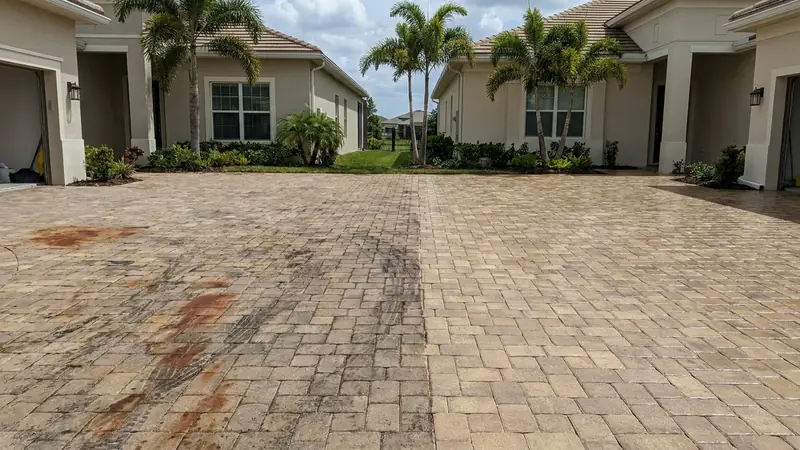
4. Sprinkler rust spots
A paver company that works in the area lists irrigation rust among the problems it sees most. Those spots get treated during the wash, so the coat does not lock them in.
5. Cloudy or peeling old sealer
The same company says old sealer that has turned white or started to peel usually has to be stripped first. Unilock adds that old and new products need to be compatible.
How much does paver sealing cost in FishHawk?
A paver company that serves FishHawk lists about $1.75 to $3.00 per square foot to clean, sand and seal. It says the final number moves with the shape your pavers are in, the sealer and finish you choose, and the amount of repair work and sand needed. Price follows square footage first, then condition. To turn these ranges into a real number for your house, ask for a free estimate.
Want to start with a wash instead? Open the paver cleaning and joint sand guide, browse the places served near paver sealing in FishHawk or read contractor standards.
| Paved area | Typical example | Clean, sand and seal |
|---|---|---|
| 300 sq ft | Small patio or walkway | $525 to $900 |
| 600 sq ft | Two car driveway | $1,050 to $1,800 |
| 1,000 sq ft | Large driveway or pool deck | $1,750 to $3,000 |
| 1,500 sq ft | Driveway plus pool deck | $2,625 to $4,500 |
Math based on the $1.75 to $3.00 per square foot that Tampa Bay paver companies publish. Your contractor sets the actual price after seeing the surface. Repairs, leveling and stripping failed sealer are usually extra.
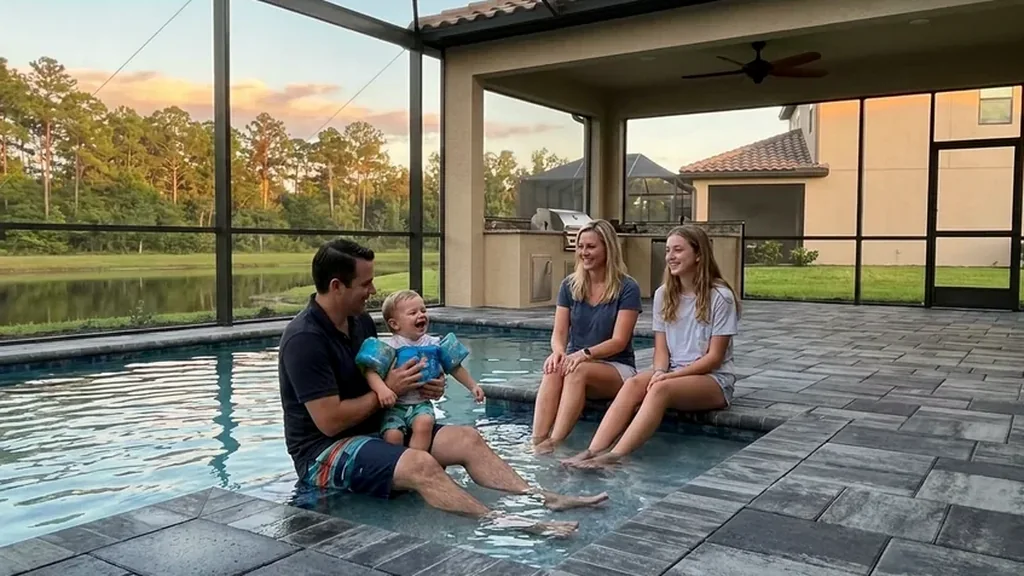
Why hire a local contractor for paver sealing in FishHawk?
A local contractor already works under the same sun and summer storms your pavers face. Get the price in writing and decide at your own pace. To get started, call (656) 269-5576.
A contractor who knows this part of Hillsborough County
A local company already deals with the same sun, summer storms and community rules your pavers do. Your first visit starts from local knowledge instead of guesses.
A free look and a free price
The estimate is free. If the price or the plan does not fit, you can say no and walk away.
Real numbers before the first call
This site shows what paver companies publish per square foot around Tampa Bay. A quote that lands far outside that range is worth a question.
You make the call
You decide whether to hire the contractor. Read what to look for in a contractor, ask for the price in writing and take your time.
How do I get a free paver sealing estimate?
Call or send the short form. You get an answer within 1 business day, and often much sooner.
Free, no obligation
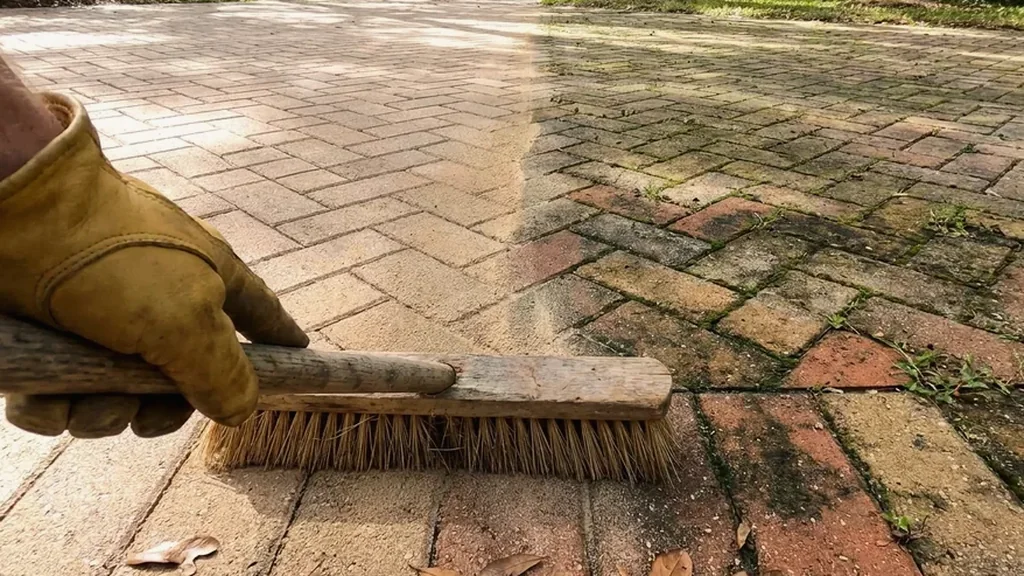
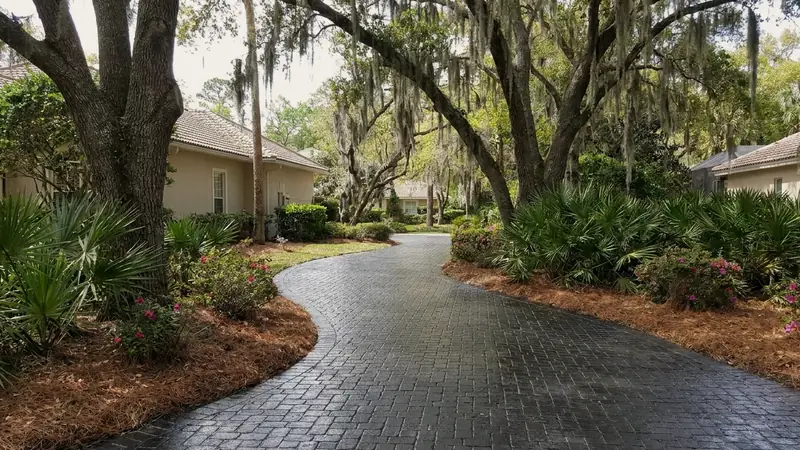
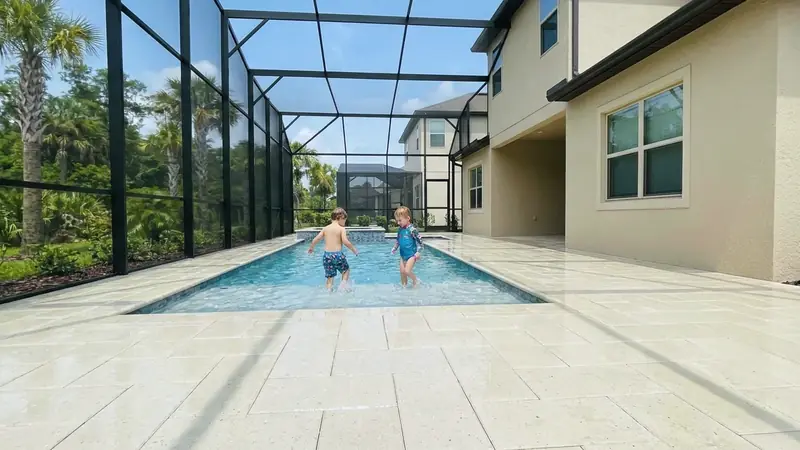
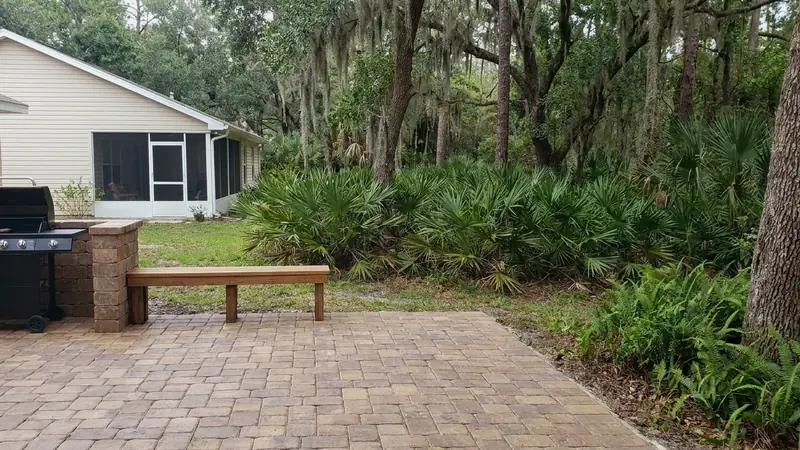
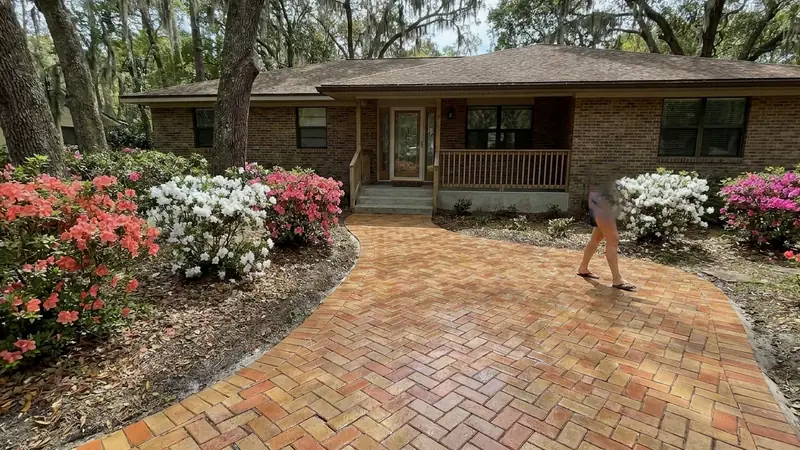
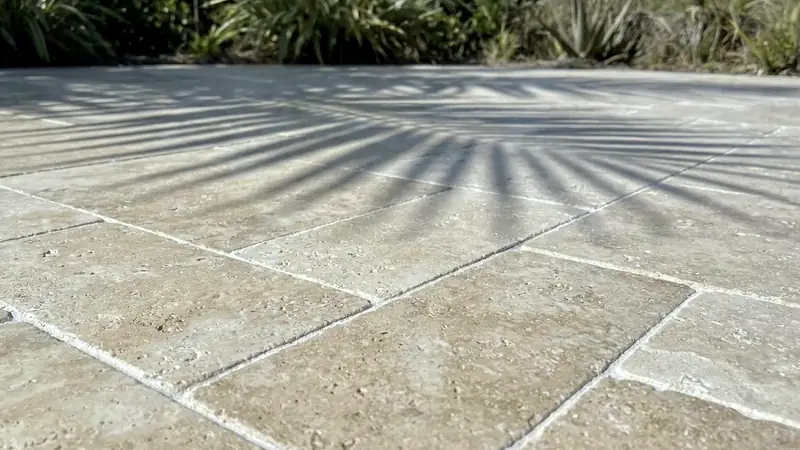
How do FishHawk pavers look once the sealer is down?
How does the paver sealing process work?
The paver sealing process has five steps, from a first look at the surface to a walk-through once the coat is down. To get on the schedule, call (656) 269-5576.
1. Inspect and test
The contractor walks the pavers, marks dips and stains and tries the sealer on a small corner. Unilock suggests that test.
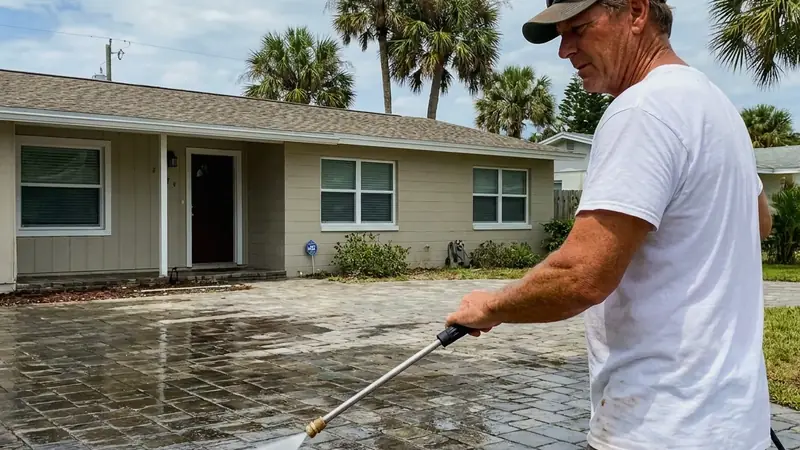
2. Wash
A stiff broom, a hose or a low pressure wash lifts the dirt, and a dedicated paver cleaner goes on oil and grease. Unilock puts a fan nozzle about 12 inches off the surface at a 30 degree angle, so the joint sand stays put.
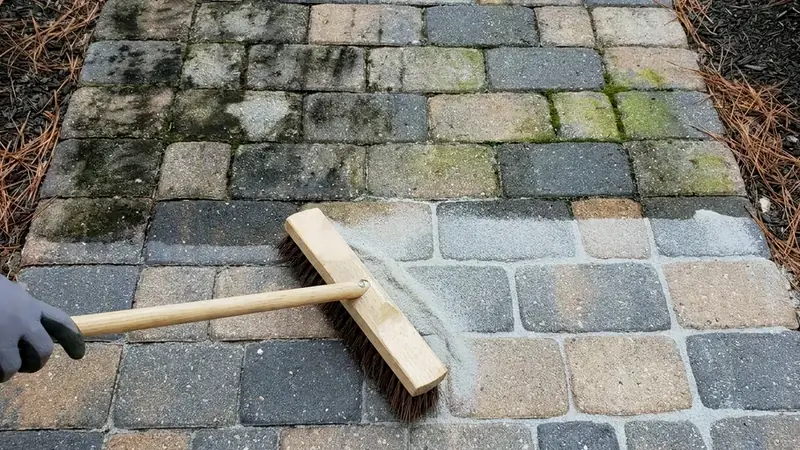
3. Dry and refill the joints
Unilock says pavers need a few hours in warm sun or about a day in shade to dry. New joint sand is then swept in.
4. Apply the sealer
A pump-up sprayer or a foam or short pile roller puts the coat on. Western Interlock says a solvent-based product can melt a plastic garden sprayer, so metal ones are used for those.
5. Cure and walk through
The contractor shows you the finished area and tells you how long to keep off. Unilock puts a full cure at up to 48 hours of dry weather.
Frequently Asked Questions
How much does it cost to seal pavers per square foot?
A paver company that serves FishHawk lists about $1.75 to $3.00 per square foot to clean, sand and seal. At those rates a 600 square foot driveway comes to about $1,050 to $1,800. Repairs, leveling and removing a failed coat cost extra.
How often should pavers be resealed in Florida?
Two to five years is the range a paver company serving FishHawk gives, and Unilock says three to five. Full sun, sprinkler overspray and daily car traffic push toward the short end. A shaded walkway can run longer than a sunny pool deck.
Is it better to spray or roll paver sealer?
Either works, and many contractors use both. Unilock lists a pump-up sprayer, a foam roller or a short pile roller, and says a dry roller afterward lifts extra sealer so streaks and drips do not set. Ask which method fits your surface.
Can I seal my pavers myself?
Yes, but it is easy to get wrong. Unilock says applying sealer can be tricky the first time, and Western Interlock warns that skipped steps, hot pavers or wet pavers can make a mess.
What are the downsides of sealing pavers?
The main one is the repeat cost, because a coat has to be redone every few years. High gloss can be slippery when wet, and Unilock says a matte finish keeps more traction.
Is it good to seal pavers in Florida?
Yes, once the color has faded, the joints have emptied or green growth has set in. Unilock says sealing guards against sun fading and makes a surface easier to sweep and wash.
Why is paver sealing so expensive?
Unilock lists $80 to $150 a gallon, with a gallon covering 80 to 150 square feet, which works out to roughly $0.53 to $1.88 a square foot for one coat. The wash, the new joint sand, the drying time and the labor come on top of that.
Does my FishHawk HOA need to approve paver sealing?
Check with your association first. Paver companies that work in FishHawk and Lithia say the HOAs there review exterior changes, and that a clear coat tends to leave the look as it was. A tint or a deeper wet look is the kind of change to clear before the work.
Can a summer storm stop a paver sealing job in FishHawk?
Yes. Unilock says sealer needs clear skies for 24 to 48 hours before it goes on and dry weather while it cures. Florida gets more thunderstorms than any other state, most often in summer afternoons, so a contractor may move your date.
How long should I stay off pavers after sealing?
Give it about a day before anyone walks on it, and a bit more before cars. Western Interlock says to wait at least 24 hours before foot or vehicle traffic, and Unilock allows up to 48 hours of dry weather for a full cure.
Can I seal over old sealer that is peeling or cloudy?
Usually not. A pressure washing company in Lithia says old sealer that has turned white or started to peel typically has to be stripped first. Unilock adds that old and new products should be tested for compatibility before anything goes on.
Does sealing stop weeds from growing between pavers?
It slows them. Unilock says sealer keeps more sand in the joints and that tighter joints give seeds fewer places to take hold. Joints that have already emptied need new sand first, since Western Interlock links low sand to weeds and shifting pavers.
Can sealing cover up rust stains from sprinklers?
No, and it can make them stand out. Unilock says sealer accentuates stains left on the surface, so rust is treated during the wash. A pressure washing company in Lithia lists irrigation rust as a common problem around here.
How long should new pavers wait before sealing?
Unilock suggests 60 to 90 days after the install. New pavers often show efflorescence, a white haze from salts rising through the stone, and Unilock says it can take two or three months, or up to a year, to fade.
Will sealer stop efflorescence on my pavers?
Not permanently. Wikipedia says sealers cannot stop efflorescence for good, and Unilock calls it temporary. Sealing too early can trap the haze under the coat, so the surface is checked and washed first.
Ready to protect the color on your FishHawk pavers?
Tell a local contractor what needs sealing. A reply lands within 1 business day, and often well before that.
Free, no obligation